

Handheld POS systems: what they change, and when they're the wrong buy
Handhelds get sold on the promise of faster tables. What they change is walking, and whether that helps you depends on your floor plan.
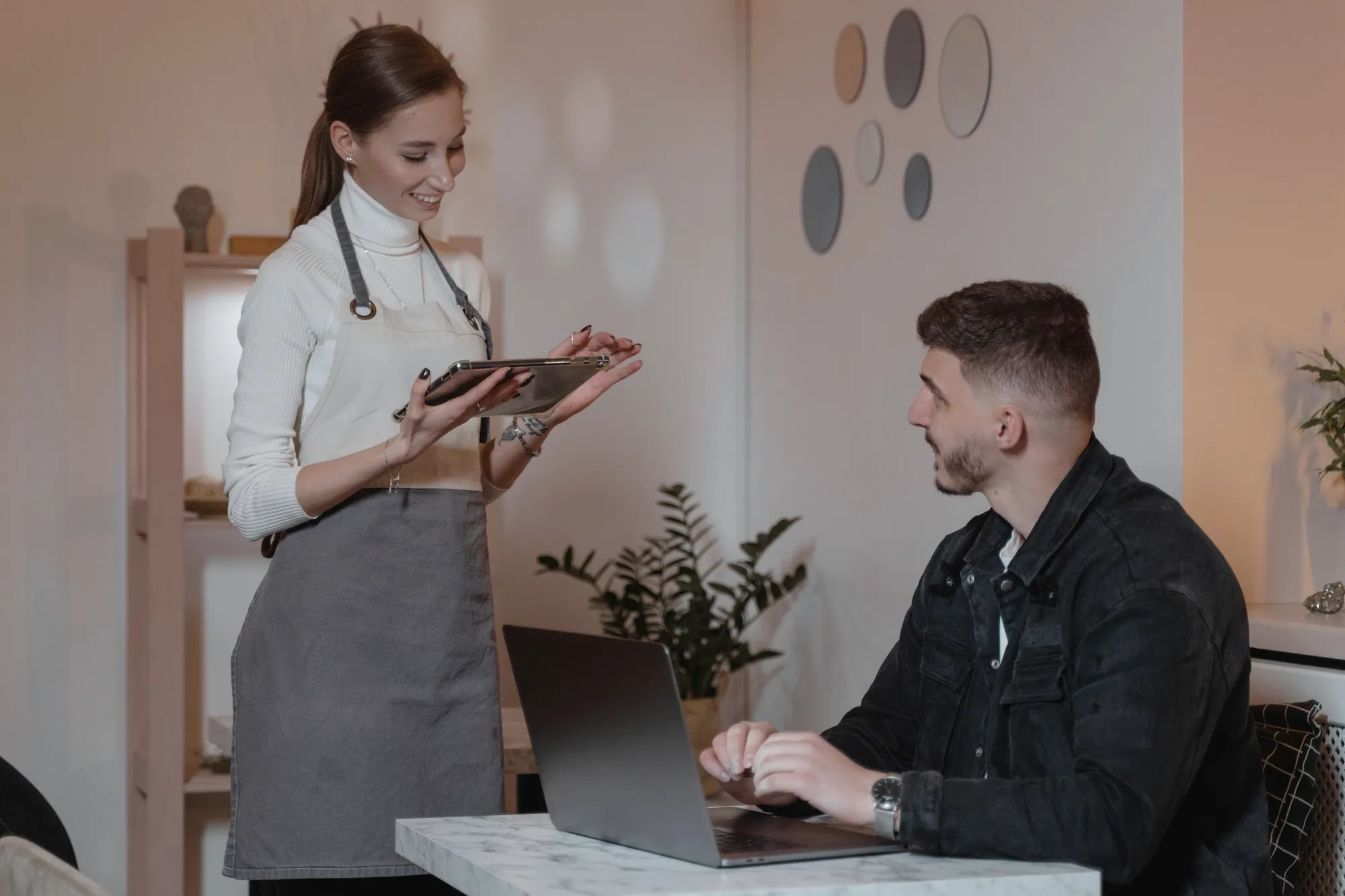
A handheld POS is a full point of sale in a server's hand. The order goes to the kitchen from table twelve, not from the wait station, and the card gets dipped or tapped while the guest watches. Both platforms we carry have one. Shift4 calls it the Handheld. Clover calls it the Flex. Neither one is right for every dining room, and your wireless coverage will decide this purchase long before the spec sheet does.
What does a handheld change on a Friday night?
Trips, mostly. Without a handheld, a server walks to a station to fire the order, walks back with drinks, walks up to print the check, walks over to run the card, then walks out one more time with the slip. One table. With a handheld the order fires at the table and the card runs at the table. We aren't going to quote you a percentage improvement on that, because we haven't run a study and neither has the rep who quotes one at you.
Accuracy is the second one. Ring the order in front of the guest and the modifier and the allergy note get captured while she is still speaking, instead of being rebuilt from memory ninety seconds later at a terminal. Your kitchen will feel that before you do.
Third, the card never leaves the table. Fraud exposure drops, and in a busy bar you delete the walk to the terminal, which is where a lot of open tabs go missing at closing time.
Will a handheld even work in my building?
Wireless coverage, and that is the whole game. A handheld is only as good as the worst corner of your dining room. Plaster, brick, tin ceilings, a walk in cooler and a steel prep line all eat 2.4 and 5 gigahertz signal, and a speed test at the host stand will never show you any of it. The patio and the side room are usually where it dies. One consumer router in the office does not cover a restaurant, and no POS vendor is going to raise that on the sales call.
Cellular fallback matters for the same reason. The Shift4 Dine Handheld carries both 4G and WiFi, so curbside and the far end of the patio stay live when the wireless quits. Clover publishes an 8 hour battery life on the Flex, which is the number to hold up against a double shift.
Then the routing question. A handheld only pays off if the order lands somewhere useful, which means kitchen printers or a kitchen display configured station by station. Feed three prep stations through one printer at the pass and you have built a bottleneck, not removed one.
Charging, last. Decide now where the devices sleep between shifts, whose name is on docking them, and how many spares you keep. A dead handheld at seven on a Friday is a service outage.
Shift4 Dine Handheld or Clover Flex?
Both run the full POS on the device. Neither is a cut down companion app hanging off a terminal. What separates them is connectivity, printing, and how each vendor packages contactless.
Shift4 publishes 4G and WiFi on the Handheld, EMV chip, NFC tap with swipe as a backup, Apple Pay and Google Pay, all day battery, and payments secured by tokenization and PCI validated point to point encryption. Clover publishes the Flex as a handheld POS with an 8 hour battery life and a built in receipt printer. The printer earns its place on tableside signature and receipt workflows.
Watch the packaging. On Clover's published full service tables, tap and mobile wallets are not included on the Starter package at all, they are Flex only at Standard, and they are Flex and Station Duo only at Advanced. Buy the wrong tier and your handheld ends up the only device in the building that takes a tap.
A real person calls you back within two hours, Monday to Saturday, 8am to 7pm Central.
How many handhelds do I need to buy?
Count sections, not staff. A server working one section needs a device for that section, so on most floors you are buying one handheld per server on the floor at peak, plus a spare sitting on a charger. Bars work differently. A bar wants one dedicated device per well and a fixed station, because bartenders are not walking anywhere. They are standing in one spot with a queue in front of them.
Buying one handheld for four servers to share is the most common way this purchase fails. The device turns into something people go looking for, which is the walking you were trying to delete.
Software on both platforms is typically billed per terminal per month, so every handheld shows up again on next month's bill. Run the three year number before you decide, not the sticker.
When should I skip the handhelds?
Counter service, where the guest comes to you. If there is already a queue at a register, a handheld only helps for line busting during one specific rush, and Clover puts line busting only in its published quick service Advanced package. For most counter operations a kiosk or a second register does more.
Very small dining rooms, where the wait station is six steps from the far table. You will not save enough walking to cover the recurring per device software cost.
Restaurants with a wireless problem nobody has fixed yet. Buy handhelds first and you convert a network problem into a service problem, in front of guests. Fix the network, then buy the devices.
Kitchens with no display or printer routing worked out. The handheld will happily fire a ticket at one printer nobody in the kitchen is watching.
Handhelds: what they fix and what they don't
Worth having in most full service dining rooms and most bars. Worth arguing about almost everywhere else.
What works
- Orders fire from the table, so the kitchen starts on the ticket earlier.
- Modifiers and allergy notes get captured while the guest is still talking.
- The card never leaves the table, which cuts fraud exposure and walked tabs at once.
- Paying at the table shortens the slowest part of a guest's night, which is waiting to leave.
- Cellular capable handhelds keep curbside, patio and delivery running when the wireless does not reach.
- Both platforms we carry run the full POS on the handheld, not a reduced companion app.
What does not
- Software is generally billed per terminal per month, so handhelds are a bill that grows every time your floor does. They are not a one time purchase.
- They expose every weak spot in your wireless, and old Arkansas buildings full of brick, plaster and steel are merciless about it.
- Batteries die and screens break. Without spares, a charging routine and one person accountable for it, you will be a device short on a Friday.
- A server who has worked a station for fifteen years will be slower on a handheld for two weeks. Schedule extra labor for that, or your go live will look like a software failure.
- On Clover, whether a device takes a tap depends on which device and which package you bought. A cheap package can leave your fixed terminal unable to accept contactless at all.
- In counter service they solve close to nothing, and line busting on Clover shows up only in the published quick service Advanced package.
Questions restaurant owners ask
Will a handheld work on my patio?
Only if the signal gets out there. Wireless rarely covers an outdoor space well, especially through brick or under a metal roof. A handheld with cellular fallback, like the 4G capable Shift4 Dine Handheld, is the safer buy for patio and curbside. Otherwise put an outdoor access point in the install budget and find the gap now, not on opening weekend.
Do handhelds replace my main terminal?
No. You still want a fixed station for cash handling, manager functions, end of day reporting and the nights a device is charging or broken. Handhelds extend the POS onto the floor. They do not replace the counter. Most dining rooms run one or two fixed stations plus a handheld for every server on at peak.
What happens if the WiFi drops mid service?
Behavior differs by platform and by configuration, so ask the question in those words and get the answer in writing before you sign. A device with cellular fallback keeps working when the wireless does not. Put this to every rep you meet, because the confident vague answer and the accurate answer sound nothing alike.
How much does a handheld add to my monthly bill?
Depends on the platform. Clover publishes package prices where the Flex appears from the Standard full service tier upward. Shift4 does not publish a per terminal software figure at all. Either way, get the recurring cost per additional device in writing, then multiply by 36 months before you settle on how many you need.
Can bartenders use handhelds?
A bar usually wants one device per well plus a fixed station, not one per bartender, because bartenders stay put and the queue comes to them. Where a handheld earns its keep behind a bar is closing tabs and running cards without leaving the well, which is where the late night losses live.
Vendor pricing and tax rates change without notice. Confirm current figures with the vendor, the city or your accountant before you rely on them. Not tax, legal or accounting advice.
Every number on this page traces to a primary source
- Shift4 Dine Handheld: 4G and WiFi, EMV, NFC and swipe backup, Apple Pay and Google Pay, all day battery, full POS functionality, tokenisation and PCI validated point to point encryption.dine.shift4.com / handheld pos system
- Clover Flex is published as a handheld POS with an 8 hour battery life and a built in receipt printer.clover.com / restaurant
- On Clover's published full service tables, tap and mobile wallets are not included at Starter, are Flex only at Standard, and are Flex and Station Duo only at Advanced.clover.com / restaurant
- Line busting appears only in Clover's published quick service Advanced package.clover.com / quick service restaurant