
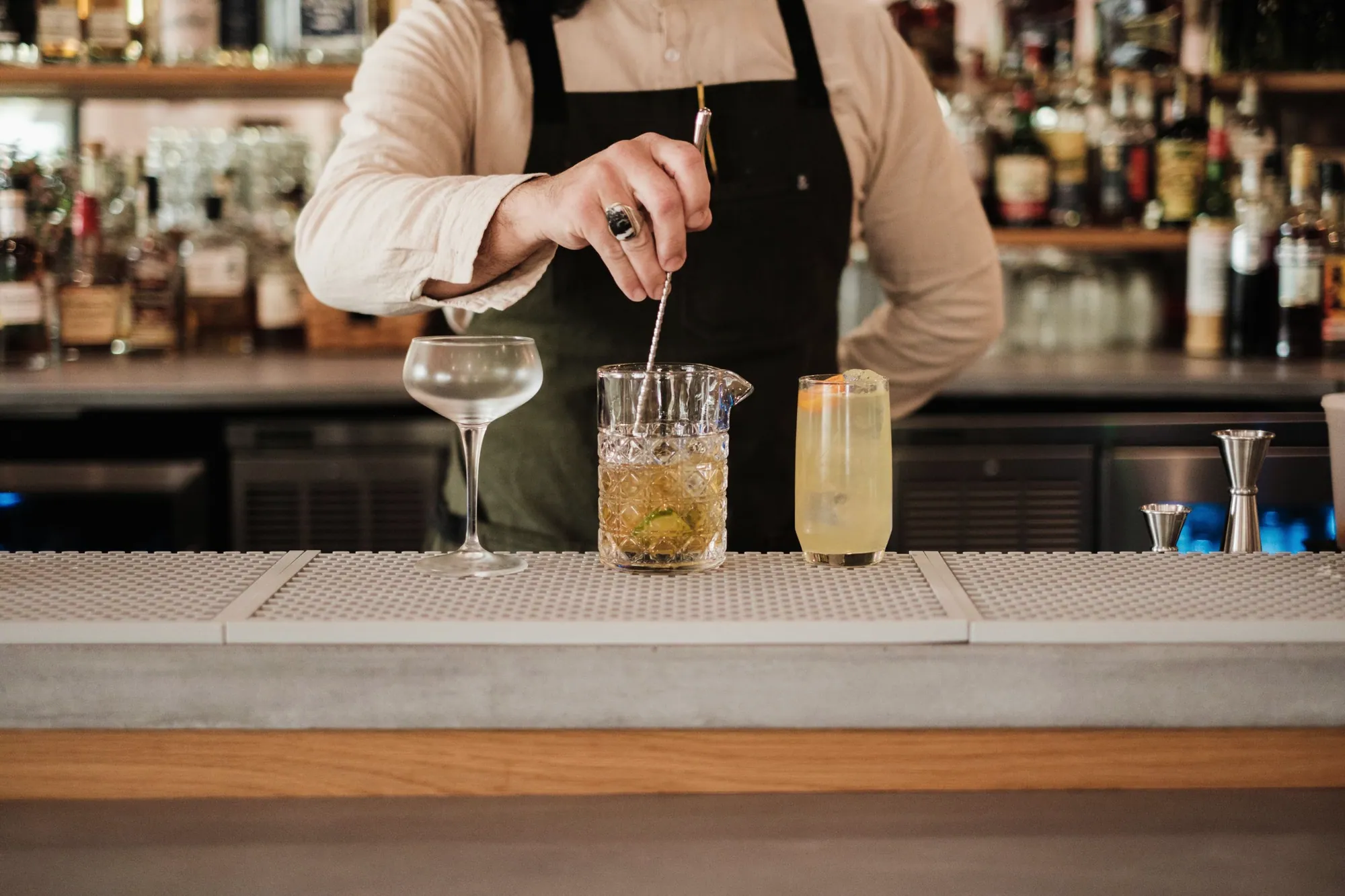
A mixed drink sold in a Little Rock restaurant is taxed at a combined 32.625%. The stack is ordinary sales tax of 8.625%, a 14% state mixed drink tax, and a 10% City of Little Rock tax on restaurant liquor. The 2% hospitality tax that applies to prepared food does not apply to mixed drinks. Private clubs reach 27.625%, because the city portion is lower.
How does the 32.625% break down?
Ordinary sales tax first: 6.5% state, 1% Pulaski County and 1.125% City of Little Rock, which is 8.625%. Then the liquor specific layers. Arkansas applies a state mixed drink tax totalling 14%, made up of a 10% mixed drink tax and a 4% additional mixed drink tax. The City of Little Rock applies a further 10% on restaurant liquor.
Add those together and a mixed drink carries 32.625%. On a twelve dollar cocktail that is $3.92 in tax, against $1.28 if it were taxed like food. The 2% hospitality tax, which does apply to the ribeye on the same check, does not apply to the cocktail at all.
This is the most misconfigured thing we see in Arkansas restaurants.
Why are private clubs taxed differently?
Roughly half of Arkansas is dry at the county level. In those places a restaurant that serves alcohol usually operates under a private club permit, not an ordinary restaurant liquor permit. The tax treatment follows the permit, not the food.
In Little Rock a private club reaches 27.625% on mixed drinks, not 32.625%, because the city portion applied to private clubs is lower. The state mixed drink taxes still apply.
If you hold a private club permit, two things follow for your POS. Your liquor tax group has to carry the private club rate, not the restaurant rate. And you need to be able to track membership, because the permit depends on it. A system configured by someone who assumed you were an ordinary restaurant will be wrong on both.
What about beer and wine?
They are frequently treated differently again, and the treatment is local. Fayetteville is the clearest illustration: its 5% supplemental beverage tax applies to spirits but explicitly excludes wine, beer and malt beverages under 5% alcohol by weight. So in Fayetteville a cocktail is taxed at 16.75% while a beer on the same tab sits at the prepared food rate of 11.75%.
Three tax groups on one ticket, then. If your POS has a single liquor button group covering everything behind the bar, it is wrong in Fayetteville.
Ordinary sales tax of 8.625% plus a 14% state mixed drink tax plus 10% City of Little Rock.
How should this be set up in the POS?
Separate tax groups for prepared food, mixed drinks, and beer and wine, with the rates for your specific city and your specific permit type. Every liquor button assigned to the correct group at the item level, not the category level, because categories drift as menus change.
Then check your reporting. You want a report that shows food sales and alcohol sales separately, with the tax collected on each, because the returns are separate and because your permit may depend on the ratio between them.
Ask any POS vendor to show you this working on a test ticket with a food item and a cocktail before you sign. If they cannot produce two different rates on one check in a demo, they will not produce it in your dining room either.
Questions restaurant owners ask
Why is the mixed drink tax in Little Rock so much higher than food?
Because liquor carries a 14% state mixed drink tax and a 10% City of Little Rock tax that food never sees, on top of ordinary sales tax. Meanwhile the 2% hospitality tax that applies to prepared food does not apply to mixed drinks. The two move in opposite directions, which widens the gap to 22 percentage points.
Do I show the mixed drink tax separately on the guest check?
Practice varies and the requirements can differ by tax and by locality. Many Arkansas operators show a single tax line while their POS tracks the components underneath for reporting. Confirm the presentation requirement with your accountant, and make sure the underlying split is captured regardless of what prints.
Does the private club rate apply just because I have members?
No. It follows the permit you hold, not the fact that you keep a member list. If you are unsure which permit governs your establishment, check with Arkansas ABC before configuring tax groups, because the difference in Little Rock is five percentage points on every drink you sell.
What happens if I have been charging the wrong rate?
Talk to your accountant quickly. Undercollected tax is generally still owed, and it comes out of margin you have already spent. Overcollected tax is a different and more delicate problem because it belongs to your guests. Either way the exposure grows every service until the tax groups are corrected.
Vendor pricing and tax rates change without notice. Confirm current figures with the vendor, the city or your accountant before you rely on them. Not tax, legal or accounting advice.
Every number on this page traces to a primary source
- Little Rock combined rates on prepared food and mixed drinkslittlerock.gov / tax information
- Arkansas state sales and use tax rate and mixed drink tax ratesdfa.arkansas.gov / sales use tax
- Fayetteville HMR and supplemental beverage tax rates and exclusionsfayetteville-ar.gov / Sales Tax
- Arkansas state sales and use tax ratedfa.arkansas.gov / sales use tax