

How Arkansas restaurants stop paying card processing fees
The fee does not vanish. It moves. Here is exactly where it moves to, and what that costs you.

A dual pricing program posts two prices, one for card and one for cash, so the cost of accepting a card sits in the card price instead of coming out of your margin. Cash discounting is legal in all fifty states. Done properly it takes card processing off your profit and loss almost entirely. Done badly it costs you goodwill at the table, which is why the setup matters more than the sales pitch.
In this article
01What does zero fee processing actually mean?02How much is this actually worth to me?03What is the difference between cash discount, dual pricing and surcharging?04What does it cost me in guest goodwill?05Who should not do this?06How is it set up in the POS?07Questions restaurant owners askWhat does zero fee processing actually mean?
It means the processing cost stops coming out of your margin. It does not mean the cost stopped existing. Somebody still pays the card networks, and under a dual pricing program that somebody is the guest who chooses to pay by card.
Any rep who tells you the fee disappears is either confused or counting on you not asking. We would rather say it plainly: this is a decision about who absorbs a cost you are already paying today, invisibly, out of every ticket.
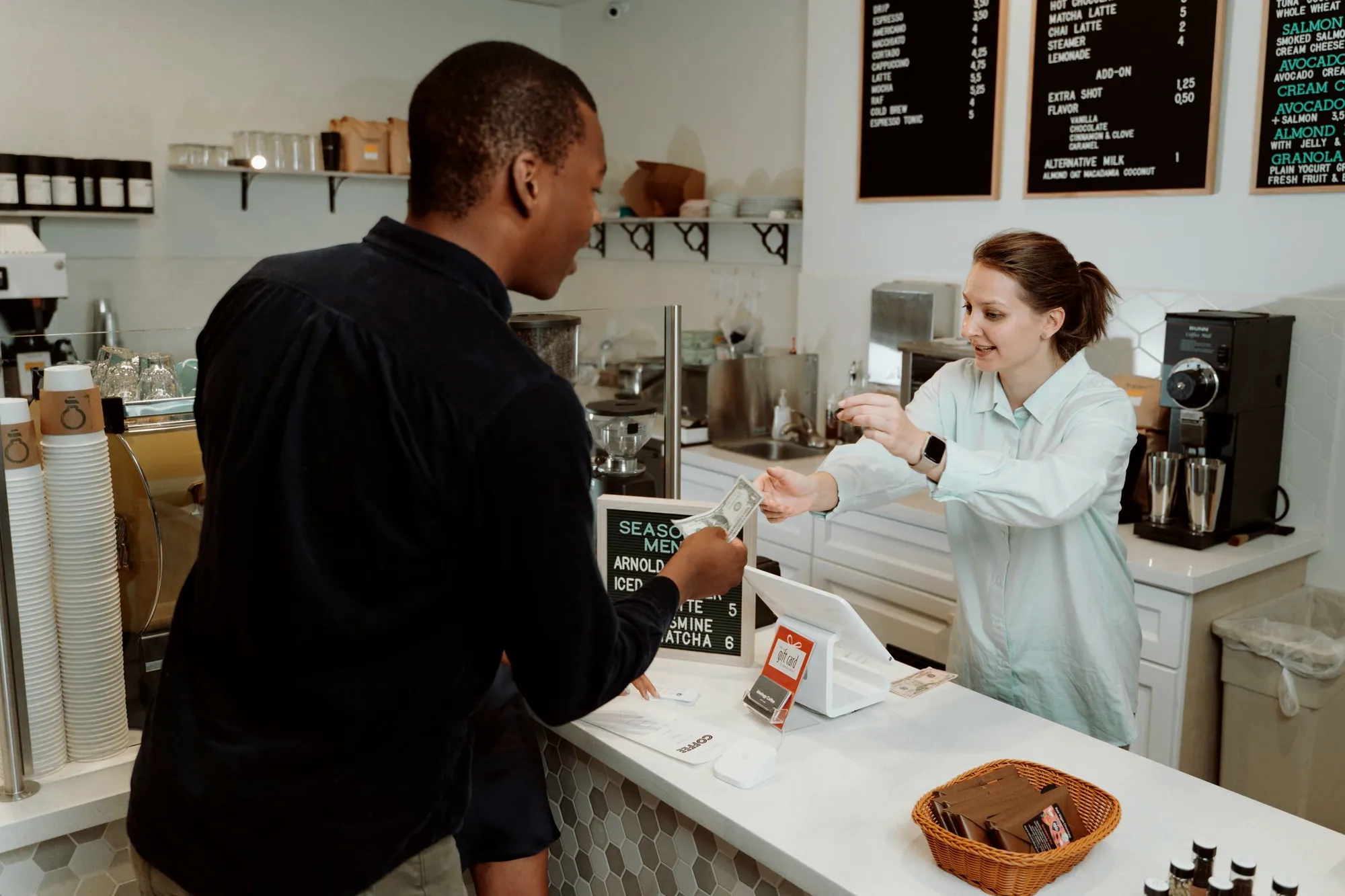
How much is this actually worth to me?
Take your merchant statement. Divide total fees by total card volume. That is your effective rate, and it is almost certainly higher than the rate you were quoted when you signed.
A restaurant running fifty thousand a month in card sales at a 3.1% effective rate is paying about eighteen thousand six hundred a year to accept cards. For a lot of independent rooms that is a line cook. It is the single largest controllable cost most owners have never renegotiated.
Run your own numbers on our processing fee calculator before you talk to anybody, including us.
What is the difference between cash discount, dual pricing and surcharging?
Cash discounting posts one price and takes an amount off when the guest pays cash. Dual pricing posts both prices side by side, so the guest sees the card price and the cash price before they order. Surcharging adds a separate fee on top of your listed price at the end of the transaction.
Cash discounting and dual pricing are legal in all fifty states. Surcharging is legal in Arkansas but carries card network conditions: a rate cap, a limit at your cost of acceptance, advance written notice, clear disclosure, and an outright ban on surcharging debit cards under federal law.
For most full service restaurants we recommend dual pricing over surcharging. A price the guest saw before they ordered lands very differently from a fee that appears after a good meal.
A real person calls you back within two hours, Monday to Saturday, 8am to 7pm Central.
What does it cost me in guest goodwill?
Something. Anyone who tells you nothing is selling you something. Menu prices go up by the card amount, and a portion of guests notice.
What decides how it lands is presentation. Both prices printed clearly on the menu, staff who can explain it in one sentence without sounding defensive, and a receipt that shows the cash saving rather than a mystery line item. Rooms that do that see very little pushback. Rooms that quietly bolt a fee onto the check and hope nobody reads it get reviews about it.
Quick service and counter service generally adapt fastest. Fine dining is the hardest case and sometimes the honest answer is not to do it.
Who should not do this?
Restaurants where the check average is high and the room is competing on experience. If a guest is spending two hundred dollars on dinner, a visible card price can undo work your service team just did.
Restaurants in a tight local market where the place across the street has not moved. Being the only menu on the block with two prices on it is a real competitive question, not a technicality.
And anyone whose effective rate is already sharp. Sometimes the honest answer is that a better rate gets you most of the way there with none of the friction at the table. We will tell you when that is the case, because we would rather have a client for ten years than a signature this month.
How is it set up in the POS?
Properly, both prices live in the item record, so the card price and the cash price print on the menu and appear on the screen without anybody doing mental arithmetic at the till. The receipt shows what the guest saved by paying cash.
The debit rule is where badly built programs create real exposure. Debit cards cannot be surcharged under federal law, so the system has to identify the card type at the moment of the sale and behave correctly. A blanket percentage applied to everything is how merchants end up in trouble.
We configure this as part of the menu build, not as an afterthought, and we will walk your staff through what to say.
A real person calls you back within two hours, Monday to Saturday, 8am to 7pm Central.
Questions restaurant owners ask
Is zero fee processing legal in Arkansas?
Cash discounting and dual pricing are legal in all fifty states, Arkansas included. Surcharging a credit card is also permitted in Arkansas subject to card network conditions, but surcharging a debit card is prohibited under federal law. Confirm current network rules with your processor before you switch anything on.
Do my guests really not mind?
Some will. Presentation decides how much. Both prices printed on the menu, staff who explain it in one sentence, and a receipt showing the cash saving is a very different experience from a surprise line item at the end. Counter service adapts fastest, fine dining is the hardest case.
Can I do this on debit cards?
You cannot surcharge a debit card, including a debit card run as credit. The prohibition follows the card type, not how the transaction is routed. This is exactly why the program has to identify card type at the moment of sale instead of applying a blanket percentage.
What if I try it and hate it?
Then turn it off. We will configure it back to standard pricing. We would rather you test it and reverse it than feel locked into something that does not suit your room, and any program that makes reversing difficult is a program worth reading twice.
Does this work with Shift4 Dine and Clover?
Yes, both support dual pricing configurations. The important part is not whether the platform can do it, it is whether whoever set it up handled the debit rule and the receipt disclosure correctly. That is a configuration question, not a software question.
Vendor pricing and tax rates change without notice. Confirm current figures with the vendor, the city or your accountant before you rely on them. Not tax, legal or accounting advice.
Every number on this page traces to a primary source
- Card network surcharging conditions, caps and disclosure requirementsusa.visa.com / regulations fees.html
- Federal prohibition on debit card surcharging (Durbin Amendment)federalreserve.gov / regii about.htm